So here I am, a Greek Australian woman living in a house with Anglo men in Melbourne. It’s ANZAC Day.
What does ANZAC Day mean to me?
What does Australia mean to me?
And who are these men I’m living with?
The Anglo men are my beautiful husband and son. I didn’t give birth to my son, so he is fully Anglo — an exotic mix of English, Irish, Welsh, with a little Scandinavian and Western European thrown in.
My husband’s family history spans England, Australia, and New Zealand, reaching back to the 1600s. If he is anything, he is Kiwi through and through. I know this because every time we visit New Zealand, the country of his birth, he transforms, vowels and all, into the version of himself our cousins across the ditch are so well known for.
My son, on the other hand, is still figuring it out. He identifies as white, but in a very global way.
I may be white, therefore Caucasian, but I am not Anglo. On my maternal side, I identify with the ethnic Greek families of Asia Minor. On my paternal side, I have a great grandmother whose ancestry traces back to Sparta.
My grandmothers, on both sides, were warriors — war widows who worked relentlessly to raise their children.
At this point, you may be thinking I’ve digressed.
But I haven’t.
Growing up in a Greek household in Melbourne, ANZAC Day was always a day of reflection and of stories. Stories of the Battle of Crete. My mother, who was a child at the time, remembered the horror vividly. My father’s memories of Patra were filled with hunger, searching for food to bring home to his mother and siblings, often at great personal risk.
So for me, war, based on my parents’ stories, was hunger, fear, enemies, parachutes, tanks, bombs, the black market, and death.
Growing up in Caulfield South war was also the woman across the road whose sons had been sent to Vietnam. It was also about the First World War when my ethnic Greek maternal grandmother, still a young girl, was forced to leave her comfortable home in Asia Minor and enter Greece as a refugee.
War, I learned early, was about displacement.
It meant leaving, either as a refugee running for your life, or as an economic refugee trying to build a better future.
My grandmother was born in Alatsata (modern day Alaçatı).
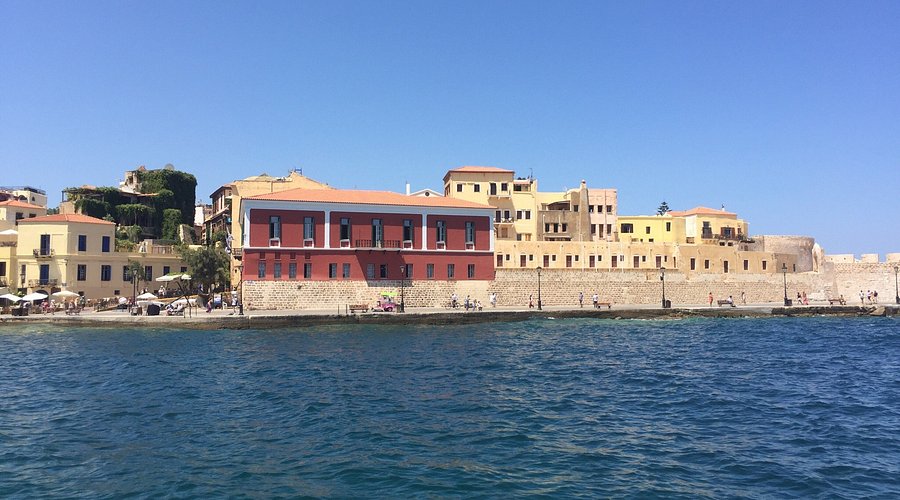
My mother was born in Chania, Crete.
I was born in Melbourne, Australia.
Three generations. Three places of birth.
Not because we were adventurous. The older generations were not afflicted with wanderlust.
But because of war.
So when I trace my family history and consider where I stand today, am I grateful to Australia? Yes, very much so. Do I love Australia? I do.
And yet my heart is fragmented.
My grandmother never forgot her homeland. She wondered constantly about her house and the land her family had owned for generations.
My mother, who I am certain lived with a form of post-traumatic stress her entire life, believed she was in Chania during her final days. Dementia, it seems, can take you wherever you wish to go. Grief, loss, and trauma never truly leave us.
And me?
I feel like an imposter everywhere.
Not Australian.
Not Greek.
Not Cretan.
And in the Peloponnese, just a stranger.
When I think about ANZAC Day, I think of the young Aussies and Kiwis who died in Crete fighting a war so far from home that my heart breaks. I think of their parents, siblings, sweethearts, the magnitude of their loss.
And yet, somehow, people go on. As children of the Antipodes we go on. We forgive. We welcome people from all over the world. Most of us believe in giving people a fair go.
Today, it feels as though war is never far away. People arrive from conflicts we’ve barely heard of. Trauma spills quietly into our communities. Even when it isn’t your war, it leaves its mark.
Years ago, in my early thirties, I visited the Maritime Museum of Crete in Chania. Tears streamed down my face as I stood before the Battle of Crete display. They fell faster when I saw an Australian Army uniform.
What were those boys doing in Crete?
How senseless is war?
As Boy George once sang, War, war is stupid.
That day, for the first time, I felt rooted. As a Greek Australian, I realised I had a shared history, Greek and Australian, tied to the same place.
In 2008, I returned to the museum with my husband. When tears ran down his face, I assumed it was his father’s wartime experiences that had shaped his childhood. I was wrong. It was a photograph of Māori men in a boat, floating in Cretan waters.
“How senseless it all was,” he said. What were those men doing so far away from home fighting a war they had no business to be in?
In 2018, I was in Chania with two of my second cousins, trying to decide where to eat dinner. I joked that since I was the foreigner, they should choose.
They looked at me and said, We may still be in Greece, but we’re foreigners here too.
And just like that, I wasn’t an imposter alone.
They had moved for study, marriage, life. I was born elsewhere. The decision was made long before I existed, because of war.
What binds us is DNA. We are all descendants of Alatsata.
Chania is our spiritual home, the place our ancestors arrived as refugees, as decreed by the Treaty of Lausanne.
These days, I describe myself simply as a Greek Melburnian. Greek migration has left an indelible mark on this city, just as the Aussie and Kiwi diggers left an indelible mark on Chania.
ANZAC Day, for me, is about survival.
It is about honouring the dead.
It’s about sacrifice.
It is not about war.
Because war is stupid.

