Facing death and imposter syndrome
I am at a crossroads in my life, and although I have a lot to say, my mind goes blank each time I try to make sense of this next phase: retirement. My mind is still trying to process a few things.
My husband and I downsized a couple of years ago, and we are now in our forever home. I am in my seventh decade, and I find myself forced to think about my own mortality.
When we downsized, we moved to an over-55s community—a retirement village, God’s waiting room, call it what you wish. Although it’s the best thing we have ever done, something about it disturbs me. That something is the fact that it reminds me of death.
I am not afraid of death, and I have seen how nonagenarians sometimes seem to look forward to it when they feel there is nothing left for them on earth. Retirement forces you to think not about death, but about life—because our time is not only finite, it is unpredictable.
Throughout my life, I have suffered greatly from imposter syndrome, and it’s time I faced it and moved on. It’s time to accept my strengths and weaknesses and embrace who I am. This is not a dress rehearsal. This is life, and from this point forward, it’s up to me how well I live it.
It’s funny, I still remember not being able to sleep the night before my first day of school.
And after that, no other first day in my life has left such an impression. Thinking back now, I was like a lamb led to the slaughter. I had no idea what to expect.
Not only was I an only child, I was also a Greek only child who really only spoke Greek. I wasn’t by any means sporty, and I was chubby. As if that wasn’t enough to make me stick out like a sore thumb, I also had a name that, even for a little Greek kid, was strange: Aristea.
Funnily enough, I already knew how to read, but at that stage I still wasn’t able to put sentences together in English. My attempts were clumsy. The other kids thought I was strange, and I thought they were strange. I should also add that I hadn’t gone to kindergarten, which added another layer to my not being as socialised as the other children.
Eventually, I learnt English, and by the time I went to Greece for my first-ever overseas holiday at the age of seven, I was bilingual.
Years later, when I worked at the Melbourne City Council, colleagues on the phone would ask me where my accent was from. Around about that time, a drag queen in a bar asked me if I was ‘continental’. My accent betrayed something that I had grown to like: my beginnings.
Initially, after high school, I went to university to study English. I had dreams of becoming a writer, but apart from a few well-written essays, that dream never went too far. I ended up dropping out after my first attempt at university.
I then worked for a short time at the now-defunct State Savings Bank before going to computer college, and upon graduation, I landed a job at the City of Melbourne (MCC).
Not all of information technology came easily to me, but aspects of it did. The fact that I ended up in the most toxic of workplaces, where some people’s behaviour was deplorable, is something worthy of a dissertation.
The good thing was that Melbourne University was just a tram ride away, and before long I was back at uni, studying part-time as a mature-aged student.
At 42, I had a huge career change. I went into health. Actually, I see it more as deciding to work for the family business. I took over the management side of my husband’s dental practice, a role I continued in until this year, when we both retired.
During that time, I also spent many hours volunteering for Rotary, developing my club’s social media presence and website, studying, raising a child, looking after my elderly mother and, a few years later, supporting my elderly aunt through her short but fatal cancer journey.
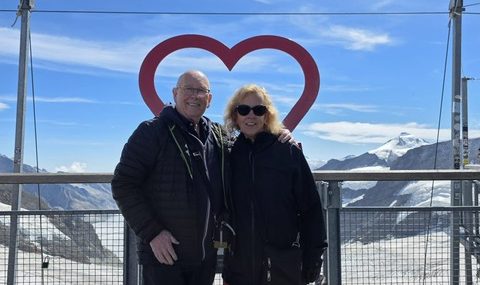
After we closed the surgery and declared ourselves retired, we went on a three-month European holiday. It was truly liberating knowing that we didn’t have to worry about work when we came back.
Yet, despite that sense of liberation, I still hadn’t quite reconciled myself to this next phase of life.
I applied for a job. An IT admin, practice admin, general dog’s body type of position.
The other day, after Monday Mahjong, I received a call from HR while I was waiting for my coffee at the coffee shop. They wanted to explain the breadth of the position before I decided whether I wanted to come in for an interview.
I was thrilled that I was still considered employable, but I realised something else.
I was happy to be retired.
So I said, ‘Thank you, but I think I’ll pass.’


Great post, Ari. and so relatable.
Thank you Jim, it’s something we all have to work out.